
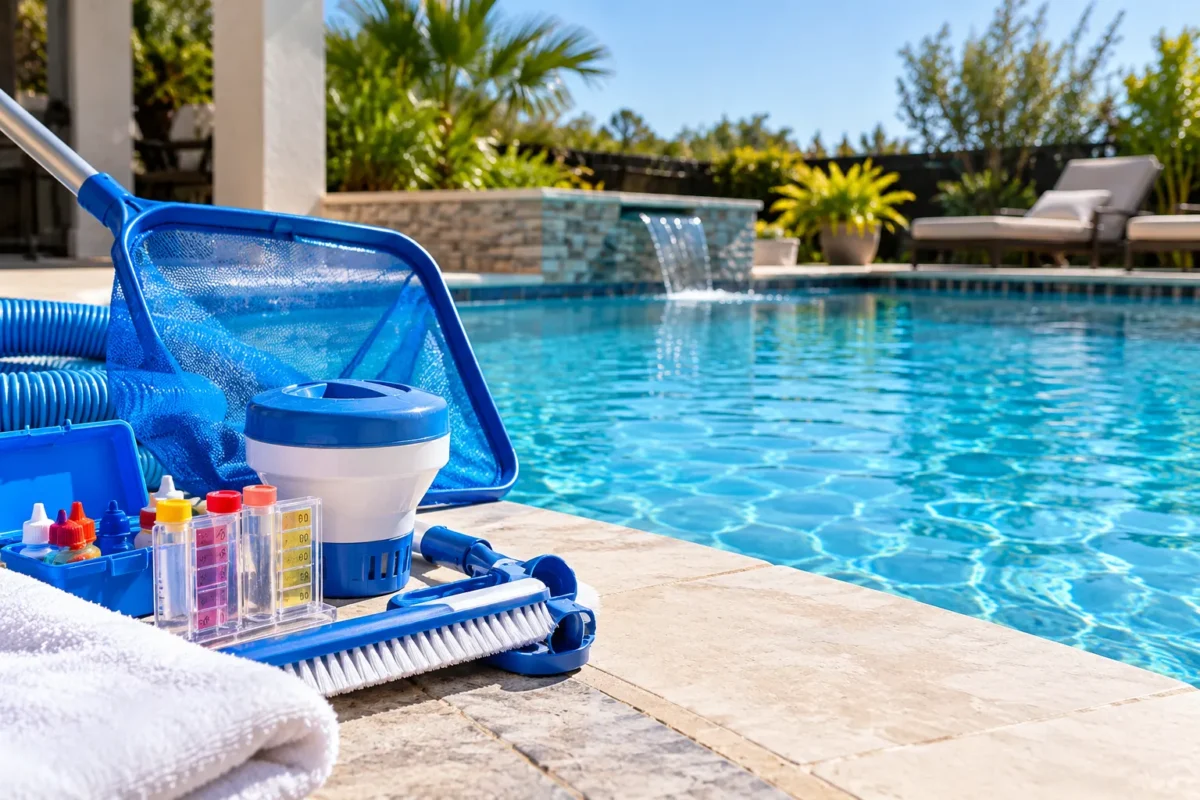
Keeping a swimming pool clean requires more than removing leaves and adding chlorine. A consistent weekly pool maintenance routine helps maintain water quality, support proper circulation, prevent algae growth, and identify equipment problems before they become expensive repairs. Whether you own an above-ground pool, an inground swimming pool, or a saltwater system, following a practical maintenance schedule makes pool care easier to manage.
This complete swimming pool maintenance guide explains daily checks, weekly cleaning tasks, water chemistry, pool filter cleaning, equipment inspections, seasonal maintenance, and essential safety precautions. It also shows how pool calculators can help you estimate water volume and make more informed chemical adjustments.
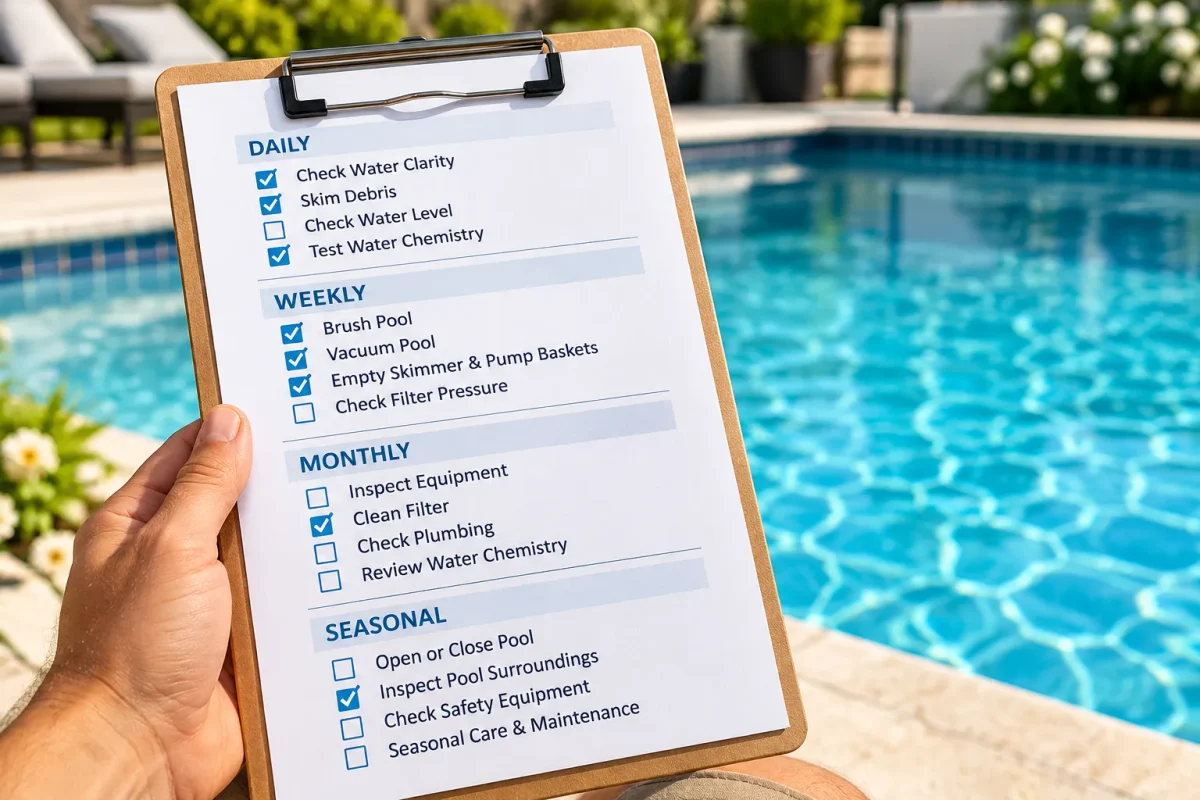
Daily Pool Maintenance Checklist
- Check water clarity: Make sure the pool water is clear and the bottom is visible.
- Skim the surface: Remove leaves, insects, and floating debris using a pool skimmer net.
- Check water level: Ensure the water level is suitable for proper skimmer and pump operation.
- Test chlorine and pH: Check sanitizer levels and pH regularly, especially during hot weather or heavy pool use.
- Inspect pool equipment: Look for unusual pump noises, leaks, warning lights, or reduced water flow.
- Check water circulation: Confirm that the pump is operating correctly and the return jets provide adequate flow.
- Look for algae: Inspect pool walls, steps, and corners for green patches or slippery surfaces.
- Remove visible debris: Brush or vacuum areas as needed when dirt accumulates.
- Review chemical requirements: Adjust chemicals only when test results indicate a need, following product instructions.
- Record maintenance activities: Log water test results, chemical additions, and any equipment problems.
What Does Pool Maintenance Include?
Pool maintenance includes water testing, cleaning, sanitation, filtration, circulation, equipment inspections, and recordkeeping. Each task contributes to maintaining clear water and a properly functioning pool system.
A complete pool maintenance routine typically involves checking chlorine and pH, removing floating debris, brushing pool surfaces, vacuuming settled dirt, emptying skimmer baskets, monitoring filter pressure, and checking the water level. Pool owners should also inspect visible plumbing and equipment for leaks, unusual noises, or reduced water flow.
The exact maintenance requirements depend on pool size, surface material, filtration system, sanitation method, weather, and swimming frequency. A residential swimming pool used every weekend may need a different cleaning frequency from a pool surrounded by trees or exposed to heavy summer use.
Weekly Pool Maintenance Checklist
A weekly pool maintenance checklist helps you organize essential tasks without overlooking important details. Use the following steps as a starting point, adjusting the frequency according to water conditions and equipment instructions.
1. Test Pool Water Chemistry
Pool water testing is one of the most important parts of weekly pool care. Use a reliable pool testing kit to measure free chlorine, pH, and other relevant parameters. Test more frequently during hot weather, after heavy swimming, or following significant rainfall.
Free chlorine helps control germs, while pH affects disinfection effectiveness and swimmer comfort. Total alkalinity helps stabilize pH, calcium hardness influences scaling and corrosion risk, and cyanuric acid helps protect chlorine from sunlight in outdoor stabilized-chlorine pools.
For residential pools, the U.S. Centers for Disease Control and Prevention (CDC) recommends maintaining pH between 7.0 and 7.8. Chlorine requirements depend on the sanitation system and whether cyanuric acid is used, so follow the applicable guidance and product instructions.
You can use the Pool Water Health Check to review your test readings, identify parameters that need attention, and prioritize adjustments. For more comprehensive calculations, the Pool Chemistry Calculator can help estimate chemical additions based on your measurements and pool volume.
2. Skim the Pool Surface and Remove Debris
Pool skimming removes leaves, insects, pollen, and other floating material before it sinks. Organic debris can decompose in the water, increase cleaning requirements, and contribute to chlorine demand.
Use a pool skimmer net to collect debris from the surface. Empty the skimmer basket whenever it becomes full, especially during windy weather or when trees surround the swimming pool. Keeping the skimmer clear helps maintain water flow through the filtration system.
3. Brush Pool Walls, Steps, and Floors
Pool brushing loosens dirt, biofilm, and early algae deposits from surfaces that automatic cleaners may miss. Brush walls, steps, corners, benches, and the waterline using a brush suitable for the pool finish.
Concrete and plaster surfaces may require different brushes from vinyl liners or fiberglass pools. Always choose equipment compatible with the surface to avoid scratches or damage.
Pay particular attention to corners, behind ladders, and areas with weak circulation. Consistent brushing supports effective filtration and makes it easier to identify staining or algae before the problem spreads.
4. How to Vacuum a Pool
Knowing how to vacuum a pool helps remove settled dirt, sand, leaves, and other particles from the floor. You can use a manual vacuum, suction-side cleaner, pressure-side cleaner, or robotic pool cleaner, depending on your setup.
For manual vacuuming, connect the vacuum head to the appropriate pole and hose, following the equipment manufacturer’s instructions. Prime the hose as required, connect it to the designated suction point, and move the vacuum slowly across the floor with overlapping passes. Moving too quickly can stir up debris instead of collecting it.
Monitor the filter pressure and water flow during cleaning. Some pools require vacuuming more frequently after storms, heavy use, or periods of increased debris. Follow the equipment instructions for vacuuming to waste, if available, because this method can lower the pool water level.
5. Empty the Skimmer and Pump Baskets
Skimmer baskets catch debris before it reaches the pump, while the pump basket protects the pump from larger particles. Both should be inspected regularly.
Before opening the pump basket housing, switch off the pump and follow the manufacturer’s shutdown and pressure-relief instructions. Never open a pressurized filter or pump housing. Remove debris, inspect the basket for damage, and reinstall the lid and seals correctly before restarting the system.
6. Check Pool Filter Pressure and Circulation
The pool filtration system removes suspended particles and supports water clarity. Check the filter pressure gauge and compare the reading with the clean-filter baseline recorded for your system.
Pool filter cleaning should be based on the manufacturer’s recommendations, pressure changes, and observed performance rather than an arbitrary weekly schedule. Sand and DE filters may require backwashing when indicated, while cartridge filters generally require removal and rinsing according to their instructions.
If pressure remains abnormal after appropriate cleaning, investigate possible blockages, valve settings, or other equipment problems. Avoid opening equipment until the pump is switched off and pressure has been safely released.
Also inspect pool return jets for adequate flow. Weak circulation may indicate a dirty filter, blocked basket, closed valve, or pump issue. The Pool Maintenance Schedule can help organize recurring cleaning and inspection tasks.
7. Check the Pool Water Level
The pool water level affects skimming and circulation. If it falls too low, the skimmer may draw air, potentially interrupting normal pump operation. If the level becomes too high, surface debris may not enter the skimmer efficiently.
Check the level regularly and maintain it within the range recommended for your pool and skimmer. Evaporation, splashing, backwashing, and vacuuming to waste can all reduce water volume.
If the water level drops unexpectedly, investigate possible leaks rather than assuming evaporation is responsible.
Pool Maintenance Schedule: Daily, Weekly, and Monthly Tasks
A practical pool maintenance schedule divides work into manageable intervals. The following routine is intended for residential pools under normal conditions; weather, usage, and equipment requirements may call for more frequent checks.
Daily or as needed: Inspect water clarity, remove visible debris, observe pump operation, and check the water level. During the swimming season, test chlorine and pH at the frequency recommended by health guidance and your pool-care professional.
Weekly: Brush surfaces, vacuum when needed, empty baskets, inspect filter pressure, review circulation, and check relevant water chemistry. Record the results and make measured adjustments when necessary.
Monthly or as recommended: Review calcium hardness, cyanuric acid, and other chemistry parameters according to your sanitation system. Inspect accessible equipment components and clean filters when their condition or pressure indicates it is necessary.
Seasonally: Prepare the pool for opening, winterize it when required, inspect covers and equipment, and adapt the maintenance routine to changing temperatures and weather.
For a customized task list, use the Pool Maintenance Schedule Calculator.
Pool Water Chemistry: Stabilizer, Alkalinity, and Calcium Hardness
Balanced pool water supports effective sanitation and helps protect pool surfaces and equipment. Understanding the main chemical parameters makes weekly pool maintenance more reliable.
Free chlorine levels: Free chlorine is the active sanitizer available to control germs. Test it regularly and adjust according to your sanitation system, cyanuric acid level, and product instructions.
Pool pH levels: pH affects chlorine effectiveness, swimmer comfort, and the risk of corrosion or scaling. Measure pH before making adjustments, and allow the water to circulate before retesting as directed.
Total alkalinity: Total alkalinity helps resist rapid pH changes. If alkalinity is outside the appropriate range, use measured adjustments rather than adding chemicals based on guesswork.
Calcium hardness: Calcium hardness affects the balance between scale formation and corrosive water. Appropriate levels depend on the pool surface, water chemistry, and equipment requirements.
Pool stabilizer and cyanuric acid levels: Cyanuric acid helps protect chlorine from sunlight in outdoor pools. Too little stabilizer can allow chlorine to degrade quickly, while excessive levels can complicate sanitation management. Test before adding more.
Salt concentration: Saltwater pools need the salt concentration specified by their chlorinator manufacturer. Do not add salt unless testing confirms it is required.
For more precise estimates, use the Pool Alkalinity Calculator or Chlorine Calculator. Always verify pool volume, product strength, and the instructions on the chemical label before dosing.
How to Prevent Pool Algae and Maintain Water Clarity
Pool algae prevention depends on effective sanitation, circulation, filtration, and regular physical cleaning. Green water, slippery surfaces, or recurring cloudy water can indicate an underlying problem that a routine cleaning session alone may not solve.
Brush surfaces regularly, remove debris, monitor chlorine levels, and investigate weak circulation. If the pool becomes green or cloudy, test the water, inspect the filter, and identify the cause before adding treatment products.
Do not assume that adding more chlorine will fix every water-quality issue. High cyanuric acid, ineffective filtration, unsuitable pH, or equipment problems can contribute to recurring difficulties. If the water is visibly cloudy or you cannot clearly see the bottom, keep swimmers out until the problem is resolved and the water is safe.
Above-Ground Pool Maintenance vs. Inground Pool Maintenance
Above-ground and inground swimming pools require regular water testing, cleaning, sanitation, filtration, and equipment inspections. However, their construction, materials, and equipment can create different maintenance needs.
| Maintenance Factor | Above-Ground Pool Maintenance | Inground Pool Maintenance |
|---|---|---|
| Pool Structure | Inspect the pool walls, support structure, and frame for visible damage. | Inspect pool surfaces and structural areas for cracks or deterioration. |
| Pool Liner | Check the flexible liner for tears, leaks, and damage. | Inspect the liner if fitted, or monitor plaster, concrete, fiberglass, or other pool finishes. |
| Filtration System | Maintain the typically compact filtration system according to manufacturer instructions. | Inspect and maintain the filtration system, which may involve more complex equipment. |
| Hoses and Plumbing | Check hoses, fittings, and connections for leaks or damage. | Inspect accessible plumbing, valves, and connections for leaks or performance issues. |
| Pool Cleaning | Skim debris, brush compatible surfaces, and vacuum as needed. | Skim debris, brush walls and steps, and vacuum according to pool conditions. |
| Water Chemistry | Test chlorine, pH, and other relevant water chemistry parameters regularly. | Follow the same water-testing principles and adjust chemicals according to test results. |
| Equipment Inspection | Check the pump, filter, hoses, and visible support components. | Check the pump, filter, plumbing, and other accessible equipment. |
| Professional Assistance | Seek help for persistent leaks, liner damage, or structural concerns. | Seek professional help for structural cracks, persistent leaks, or electrical problems. |
Regardless of pool type, use compatible cleaning equipment, follow manufacturer maintenance recommendations, and maintain a consistent pool maintenance schedule.
Saltwater Pool Maintenance Checklist
Saltwater pool maintenance still requires regular testing and cleaning. A saltwater chlorinator produces chlorine from dissolved salt, but it does not remove the need to monitor sanitation and pH.
Check chlorine and pH, test salt concentration according to the system requirements, inspect the chlorinator for alerts, and examine the cell for scale when recommended. Clean the cell only according to the manufacturer’s procedure.
Also brush pool surfaces, clean baskets, inspect the filter, and monitor calcium hardness. Saltwater systems can develop scaling or corrosion problems if water chemistry or equipment maintenance is neglected.
Seasonal Pool Maintenance and Winter Care
Seasonal pool maintenance changes with climate and swimming activity. Before opening a pool, inspect the cover, remove debris, check equipment, restore circulation, and test the water before swimming.
During summer, higher temperatures, sunlight, and heavy use may increase chlorine demand and evaporation. Monitor the water more frequently when conditions change.
For winter pool maintenance, follow a procedure suited to the local climate. Pools exposed to freezing conditions may need specific water-level adjustments, plumbing protection, and equipment winterization. Pools that remain open year-round still require regular sanitation and circulation.
Pool Cleaning Equipment and Essential Supplies
Useful pool cleaning equipment includes a skimmer net, compatible pool brush, vacuum or automatic cleaner, water testing kit, and suitable cleaning accessories. Depending on the filtration system, you may also need filter-cleaning supplies and replacement baskets or seals.
Store testing products according to their instructions and replace expired kits. Keep maintenance equipment clean and inspect it for damage.
A pool maintenance log is equally useful. Record water readings, chemical additions, filter cleaning, unusual pressure changes, leaks, and other maintenance work. This record helps identify recurring issues and improves decision-making.
Pool Chemical Safety Guidelines
Pool chemical safety is essential during every maintenance task. Read the entire product label before use, wear the recommended protective equipment, and store chemicals in their original containers in a secure, dry, appropriately ventilated location.
Never mix chlorine products with acid or combine different pool chemicals. Dangerous reactions can release toxic gases. Add products separately according to their labels, and only pre-dissolve chemicals when the manufacturer specifically instructs you to do so.
Keep children and pets away from chemicals and the maintenance area. If you are unsure how to handle a product or service equipment safely, seek qualified assistance. The CDC provides further guidance in its pool chemical safety recommendations.
Common Pool Maintenance Mistakes to Avoid
Common mistakes include testing water too infrequently, adding chemicals without measuring current levels, ignoring filter pressure, neglecting baskets, and assuming a saltwater pool requires no chlorine testing.
Another mistake is treating every cloudy-water problem with the same product. Effective troubleshooting begins with accurate measurements and an inspection of filtration and circulation. Follow product instructions, avoid unnecessary chemical additions, and consult a qualified pool professional when problems persist.
Frequently Asked Questions
How often should a pool be cleaned?
Inspect the pool regularly and remove debris whenever necessary. Brush and vacuum according to the amount of dirt, swimmer activity, and pool condition. Weekly cleaning is a useful baseline, but heavily used pools or pools surrounded by trees may need more frequent attention.
What should a weekly pool maintenance checklist include?
A weekly checklist should cover water testing, skimming, brushing, vacuuming as needed, basket cleaning, filter-pressure checks, circulation inspection, water-level checks, and a review of equipment condition.
How often should pool water be tested?
Test chlorine and pH regularly, with more frequent testing during heavy use, hot weather, or changing water conditions. Follow applicable health guidance and your pool-care system’s instructions. Check other parameters at intervals appropriate to the pool and sanitation method.
How do I clean a pool filter?
The method depends on whether you have a sand, cartridge, or DE filter. Follow the manufacturer’s instructions, switch off the pump, and release pressure before opening equipment. Backwash or clean the filter when indicated by its condition and recommended pressure threshold.
What is the difference between pool maintenance and pool cleaning?
Pool cleaning focuses on removing debris, brushing surfaces, and vacuuming dirt. Pool maintenance also includes water chemistry, sanitation, filtration, circulation, equipment inspection, and preventive care.
Does a saltwater pool need weekly maintenance?
Yes. Saltwater pools require regular water testing, surface cleaning, basket maintenance, filter inspection, and checks of salt concentration and chlorinator operation.
Why is my pool water cloudy?
Cloudy water may result from poor filtration, inadequate sanitation, chemical imbalance, suspended debris, or other water-quality problems. Test the water and inspect circulation and filtration before choosing a corrective treatment.