
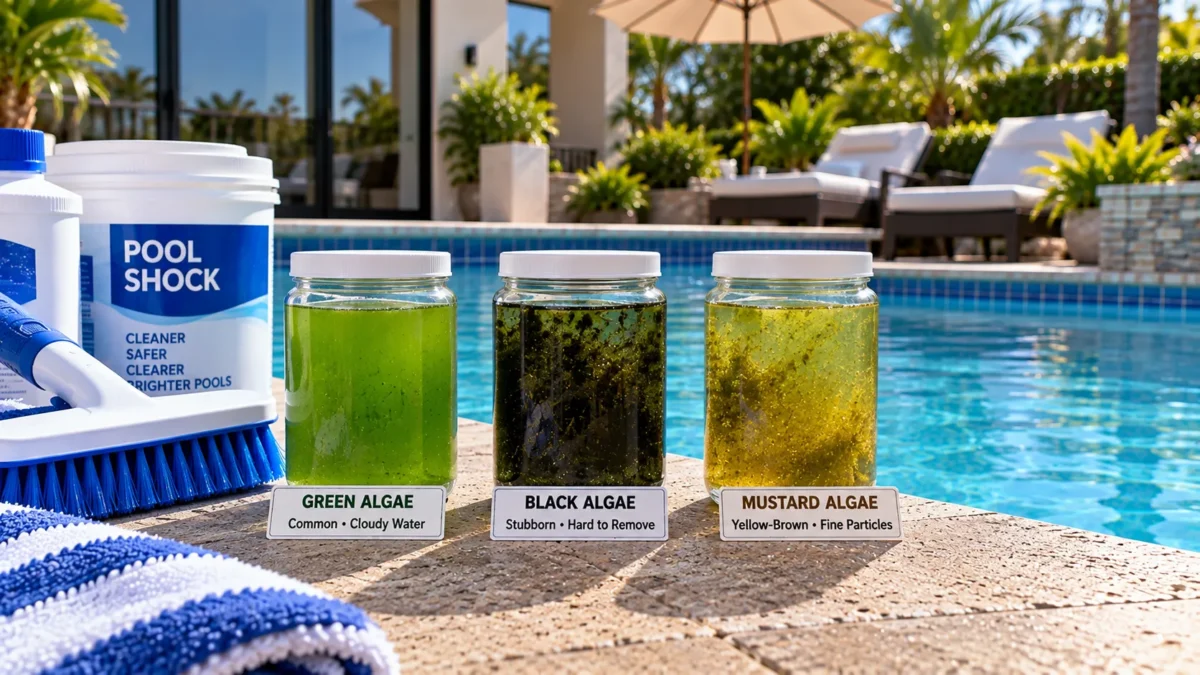
Not all algae is the same. Green algae floats and clears quickly. Mustard algae hides in shade and comes back. Black algae roots into the surface itself and is the hardest of the three to remove.
Identifying which you have matters, because the treatment differs. Green algae is a chlorine problem and responds to chlorine. Black algae has a protective layer that chlorine cannot penetrate until it is physically broken, so brushing is the treatment and chlorine only finishes the job.
What causes it
- Chlorine below its minimum for any length of time.
- Poor circulation — dead spots behind ladders, in corners and on steps.
- Cyanuric acid out of range in either direction.
- Contaminated swimwear or equipment brought from a lake or another pool, which is how mustard and black algae usually arrive.
- Warm water and sunlight, which simply speed everything up.
What to test first
Before adding anything, take a reading. Guessing at this stage is how a small problem becomes an expensive one.
| Test this | Why it matters |
|---|---|
| Free chlorine | The single most important number. Algae grows where chlorine is not. |
| Cyanuric acid | Determines the shock level and whether your chlorine is working at all. |
| pH | Chlorine loses much of its effectiveness above 7.8. |
How to fix it
- Identify which type you have. Green clouds the water; mustard brushes off easily and returns in the same shaded spot; black sits in raised dark spots that do not brush away.
- For green algae: brush, lower pH to 7.2, shock to 40% of your CYA reading and hold it, running the pump around the clock.
- For mustard algae: the same, but hold shock level for longer and clean or replace everything that touched the water — brushes, poles, swimwear, toys. It returns from whatever you missed.
- For black algae: brush each spot hard with a stainless brush on plaster, or a stiff nylon brush on vinyl, to break the protective layer. Some people rub a chlorine tablet directly on the spot. Then shock. Repeat daily — this takes a week or more.
- Run the pump continuously throughout, and clean the filter when pressure rises.
- Vacuum the dead algae and return chemistry to normal before swimming.
Black algae in particular often needs several days of very high chlorine. Do not swim until free chlorine is back below 4 ppm and has been confirmed by testing. Never mix pool chemicals, and never add two products to the water one after the other without circulating in between. Chlorine and acid together release chlorine gas. Always add chemical to water, never water to chemical.
Work out the numbers
These calculators give the figures for your pool rather than a rule of thumb.
Stopping it coming back
- Never let chlorine reach zero, even for a day.
- Brush the shaded corners, steps and behind the ladder every week.
- Rinse swimwear and equipment that has been in a lake or another pool.
- Keep cyanuric acid in the 30 to 60 ppm band.
Questions people ask
How do I know which algae I have?
Green clouds the whole pool and brushes away easily. Mustard is yellow-brown, sits in shaded areas, brushes off in a cloud and returns within days. Black forms raised dark spots with a hard protective layer that resists brushing.
Is pool algae dangerous?
The algae itself is generally not harmful to swimmers. The problem is what it indicates: water with no effective sanitiser, where bacteria can also grow. It also makes surfaces slippery and hides the pool floor.
Why does mustard algae keep coming back?
Because it survives on something that was not treated — a pool brush, a float, a swimsuit, or a shaded patch that never got brushed. Everything that touches the water has to be sanitised at the same time.
Does algaecide prevent algae?
It can help as a backup, particularly through a wet spell or a holiday. It is not a substitute for chlorine, and copper-based products can stain plaster if overused.