
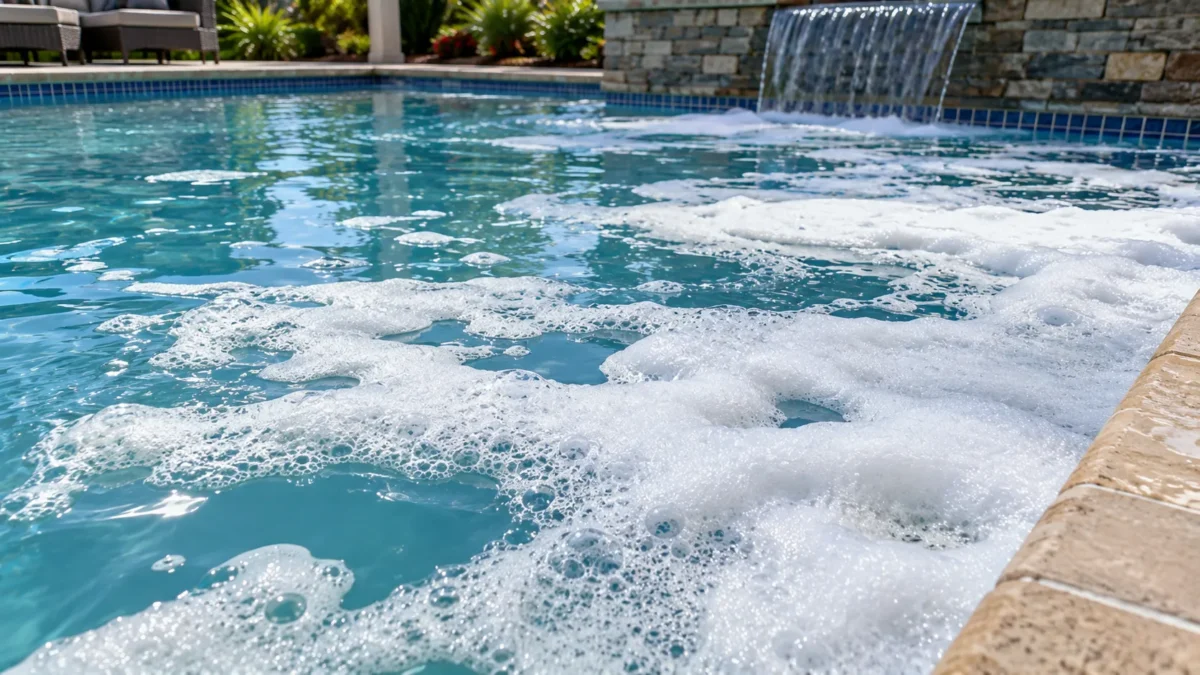
Foam that lingers on the surface, especially near the return jets, means something in the water is lowering its surface tension. Bubbles that pop straight away are just aeration and are nothing to worry about.
The distinction matters. Aeration bubbles disappear within seconds. Foam sits there, piles up in corners, and comes back after you skim it off. That persistent kind is almost always something that was added to the water, or water that has grown old and full of dissolved solids.
What causes it
- Low calcium hardness. Soft water foams readily — the most common cause in a vinyl or fibreglass pool.
- Cheap or overdosed algaecide. Many inexpensive algaecides are surfactant-based and foam heavily.
- Body products. Sunscreen, lotion, deodorant, hair product and detergent residue in swimwear all add up.
- High total dissolved solids. Water that has not been partly replaced in years.
- An air leak on the suction side. If the foam is bubbles rather than froth, check the pump lid, its O-ring and the suction fittings.
What to test first
Before adding anything, take a reading. Guessing at this stage is how a small problem becomes an expensive one.
| Test this | Why it matters |
|---|---|
| Calcium hardness | Below 150 ppm, water foams easily. This is the first thing to check. |
| Total dissolved solids | Very high TDS means the water itself is tired and needs partly replacing. |
| Free chlorine | Low chlorine allows the organic load that contributes to foaming. |
| Pump lid and O-ring | Not a chemical test, but an air leak looks like foam and is easy to rule out. |
How to fix it
- Check whether it is foam or bubbles. Bubbles that vanish in seconds point to air entering the suction side — check the pump lid and O-ring first.
- Test calcium hardness. If it is below 150 ppm, raise it. In many pools this alone stops the foaming.
- Stop using algaecide for now, particularly a cheap one. Read the label — if it lists a quaternary ammonium compound, it foams.
- Skim the foam off and let the filter run. Removing it physically helps.
- Ask swimmers to shower before getting in. It sounds fussy but it makes a measurable difference on a busy pool.
- If nothing works, replace some of the water. Draining and refilling a quarter dilutes both dissolved solids and any residual surfactant.
Foam is not usually a health hazard on its own, but it hides the water surface and makes it harder to see into the pool. Anti-foam products only mask the cause for a few hours — find out why it is foaming instead. Never mix pool chemicals, and never add two products to the water one after the other without circulating in between. Chlorine and acid together release chlorine gas. Always add chemical to water, never water to chemical.
Work out the numbers
These calculators give the figures for your pool rather than a rule of thumb.
Stopping it coming back
- Keep calcium hardness in range for your surface.
- Use a good quality non-foaming algaecide, and only when needed.
- Rinse new swimwear before its first swim — detergent residue is a common culprit.
- Replace part of the water every few years rather than only topping up.
Questions people ask
Is foamy pool water safe to swim in?
If chlorine is in range and the water is clear underneath, foam alone is not a safety problem. It is a sign something is off, not a sign the water is unsanitary.
Will anti-foam chemicals fix it?
They clear the foam for a few hours without touching the cause, so it returns. Useful the afternoon before guests arrive; not a fix.
Why did my pool suddenly start foaming?
Something changed. Usually a fresh dose of algaecide, a big refill of soft water, or a busy day with a lot of sunscreen in the pool.
Does a saltwater pool foam more?
Not because of the salt. But salt pools are often run on softer fill water and left longer between water changes, both of which do cause foaming.