
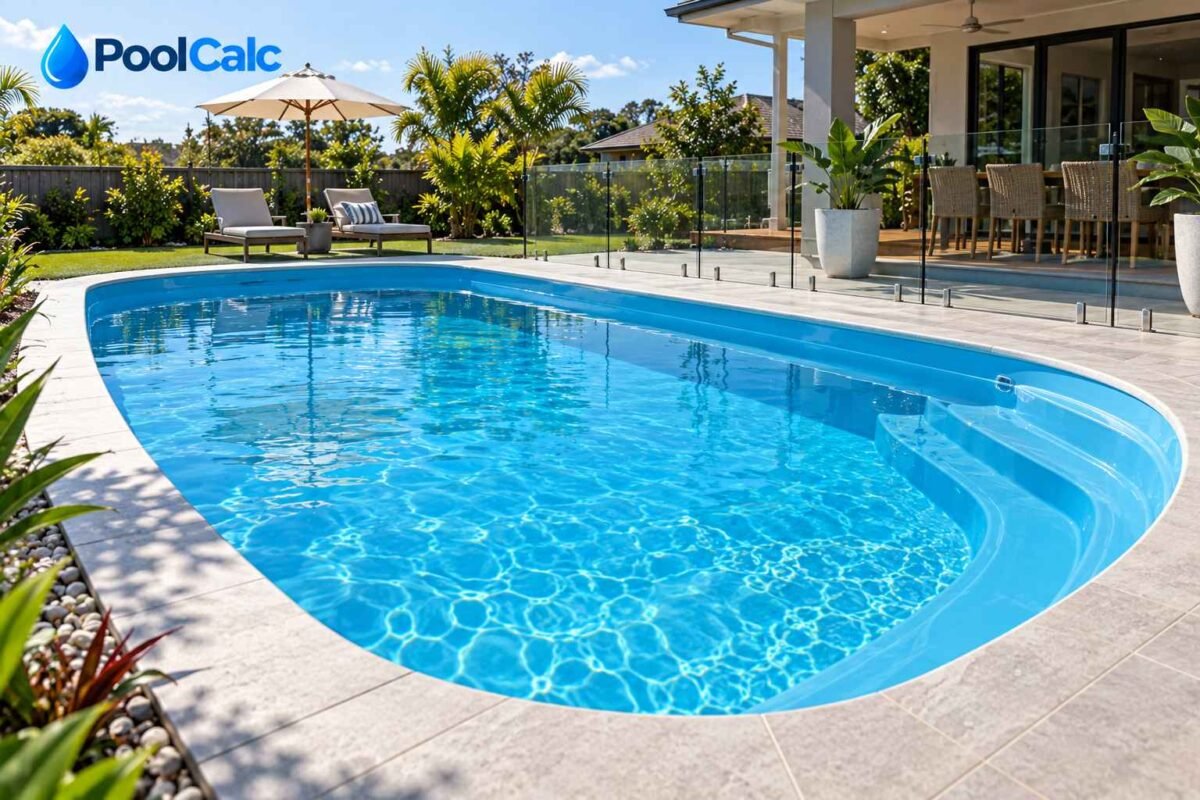
An in-ground pool is built into the ground rather than standing on it. That single difference drives everything else: it lasts decades, it can be any shape and depth, and it is a permanent change to the property.
In-ground pools come in three constructions — concrete, fibreglass and vinyl liner — and the choice matters more than almost anything else you will decide. It sets the installation time, the surface you swim against, what maintenance costs, and what happens in twenty years.
Everything on this site applies to all three. Where they differ, it is usually calcium hardness: a plaster surface needs calcium in the water or the water takes it from the walls, while vinyl and fibreglass do not.
At a glance
| Characteristic | Typical |
|---|---|
| Construction | Concrete/gunite, fibreglass shell, or vinyl liner |
| Typical depth | 3 to 8 ft, often with a shallow and deep end |
| Lifespan | Decades for the structure; surfaces are renewed periodically |
| Installation | Weeks for fibreglass, months for concrete |
| Turnover target | One full turnover a day, typically 6 to 8 hours |
Advantages and limitations
What works well
- Any shape, size and depth you want — concrete in particular has no real limits.
- Lasts for decades with proper maintenance.
- Can take a diving area, a beach entry, a tanning ledge, an integrated spa.
- Generally adds to a property in warm climates where a pool is expected.
What to weigh up
- The largest up-front investment of any pool type.
- Permanent — removing one is a substantial job in itself.
- Needs planning permission or a permit in most places.
- Fencing, alarms and safety requirements are regulated almost everywhere.
- Repairs mean excavation or draining rather than a patch kit.
Looking after one
- Skim daily, brush and vacuum weekly, test chlorine and pH twice a week in season.
- Keep the pump running for at least one full turnover a day in warm weather.
- Watch calcium hardness carefully on a plaster surface — soft water etches it.
- Backwash or clean the filter on pressure, not on a schedule.
- In freezing climates, winterise the plumbing properly or split pipes.
What it costs to own
The big number is installation, and it is driven by construction type, size, site access, ground conditions and what you put around it. Concrete is the most expensive and the slowest; fibreglass is faster and usually less; a vinyl liner pool is typically the least expensive to install.
Running costs are more predictable. The pump is normally the largest single item, followed by heating if you heat. Chemicals are usually smaller than people expect. Then there is the renewal cycle: vinyl liners are replaced periodically, plaster is resurfaced periodically, and pumps and heaters have a service life measured in years rather than decades.
The honest way to think about it is annual, not one-off. Putting money aside each year for the next pump, heater or liner turns a shock into a budget line.
Prices for pools vary enormously by region, access, ground conditions and specification, so no figure is quoted here. The Ownership Cost Calculator uses your own numbers instead of an average that would be wrong for most people.
Calculators for this pool
Maintenance Schedule
A task list built for your pool — print it and stick it by the equipment.
CalculateQuestions people ask
Which in-ground construction should I choose?
Concrete for a custom shape or unusual depth. Fibreglass for the fastest install and the lowest maintenance. Vinyl liner for the lowest up-front cost, accepting that the liner is a consumable. There is no single right answer — it depends on how long you intend to stay and what you want to swim in.
How long does an in-ground pool last?
The structure lasts decades. The surface does not: liners and plaster are renewed on a cycle, and equipment is replaced several times over the pool’s life.
Does a pool add value to a house?
It depends heavily on the climate and the local market. In hot regions where pools are normal, usually yes. In cooler regions, a pool can narrow the pool of buyers rather than widen it.
How much does it cost to run?
Electricity for the pump is normally the largest running cost on an unheated pool; heating overtakes it on a heated one. Enter your own figures in the Ownership Cost Calculator rather than trusting an average.