
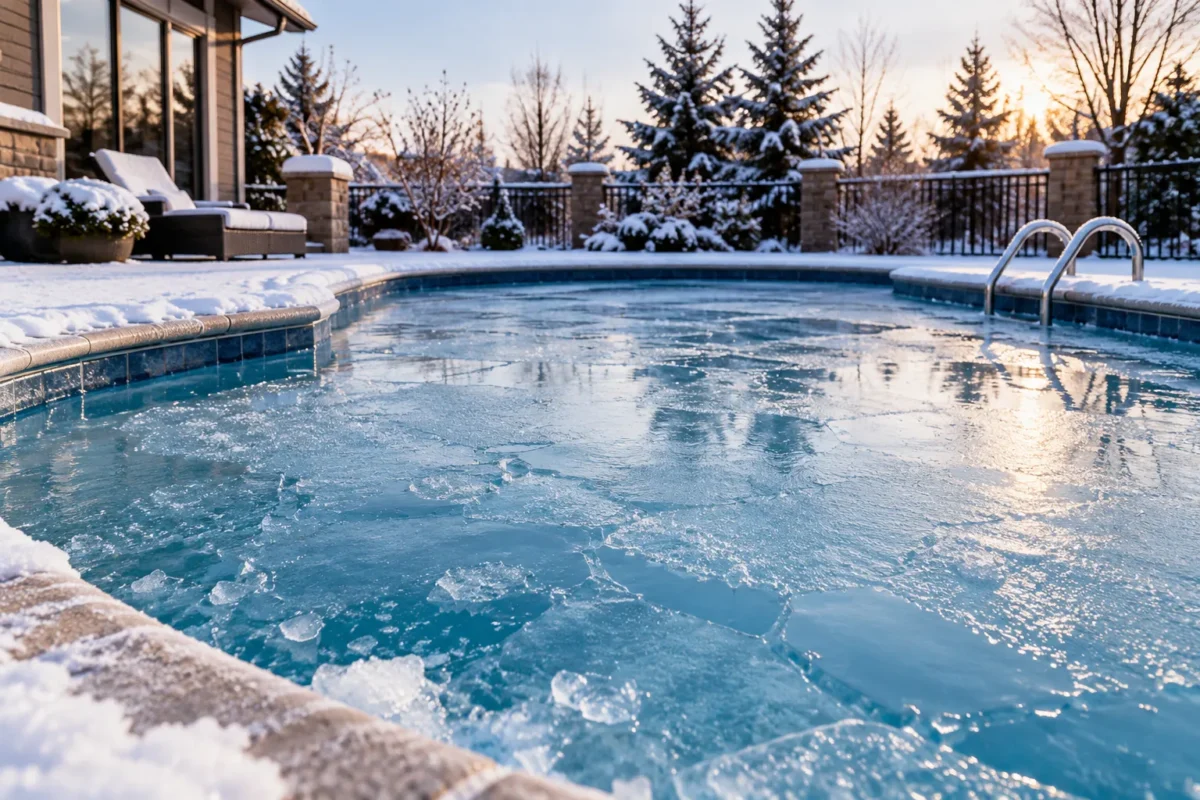
Finding a frozen pool during winter can be worrying, especially when your pool pump, filter, or plumbing may also be exposed to freezing temperatures. The good news is that a thin layer of ice on the water does not automatically mean your swimming pool is damaged. The bigger concern is water freezing inside pipes, pumps, filters, heaters, and other equipment, where expanding ice can crack components.
If you are wondering what to do if your pool freezes, start by checking the equipment without touching the ice or forcing anything to operate. Your next steps depend on whether the pool is still circulating, whether the pump has stopped, and whether you have experienced a power outage. This guide explains how to protect your equipment, recognize freeze damage, and restart your pool safely.
What Should You Do If Your Pool Freezes?
If you notice ice on your pool surface, do not panic. Keep people and pets away from the water, inspect the equipment from a safe distance, and determine whether the circulation system is operating normally. Never walk on a frozen pool or strike the ice to break it.
Follow these steps to reduce the risk of further damage:
- Check the pump: Look for normal operation, unusual noises, leaks, and warning lights without opening or touching potentially frozen equipment.
- Check the power supply: If the pump has stopped, determine whether there is a power outage, tripped breaker, or equipment fault. Do not repeatedly reset a breaker that trips again.
- Protect exposed equipment: Keep vulnerable plumbing sheltered from wind and further freezing, provided you can do so safely without covering hot motors or obstructing ventilation.
- Avoid forced operation: Never run a pump that may be frozen, obstructed, or unable to circulate water.
- Contact a pool professional: If equipment is encased in ice, pipes appear damaged, or you cannot determine whether circulation is safe, arrange an inspection.
The key is to distinguish a pool with surface ice from a pool with frozen plumbing. They are not the same problem, and the correct response can be very different.
Do Pools Freeze in the Winter?
Yes, swimming pools can freeze in winter when temperatures remain low enough for long enough. The exact freezing behavior depends on water temperature, air temperature, wind, pool size, exposure to sunlight, and whether the water is circulating. A pool does not necessarily freeze solid as soon as the air temperature drops below 32°F (0°C).
In many cases, a thin sheet of ice forms across the surface while most of the water below remains liquid. However, water trapped inside exposed plumbing or stationary equipment can freeze even when the main pool is not frozen. Because water expands by approximately 9% when it freezes, confined water can place substantial pressure on rigid components.
A pool of ice is possible during prolonged severe cold, particularly in smaller or shallow pools, but a completely frozen pool is not the usual outcome of a brief overnight freeze. The more immediate concern for most pool owners is preventing damage to the circulation system.
How to Protect Pool Equipment From Freezing
The best freeze-protection method depends on your climate and whether you intend to operate the pool throughout winter. Pools that remain open during short cold spells may use manufacturer-approved freeze protection and circulation. Pools being closed for a long winter generally need proper winterization, including removing water from vulnerable equipment and plumbing.
Should You Run Your Pool Pump in Freezing Weather?
For an open pool designed to operate through short freezes, continuous circulation can help reduce the risk of water freezing in the plumbing. If your system has automatic freeze protection, check its settings and follow the manufacturer’s instructions. Make sure the pump can circulate water through the vulnerable lines rather than assuming that the main pump protects every pipe.
However, running the pump is not a universal solution. If the system is already frozen, the pump cannot establish circulation, or a prolonged freeze is expected, continued operation may be unsafe. A pool that has been properly winterized should remain in its designated winterized state rather than being restarted casually.
Will a Pool Pump Freeze If It Is Running?
Yes, a running pump can still freeze under severe conditions. Circulation lowers risk in vulnerable sections of an operating system, but it does not guarantee protection if water flow is interrupted, a valve isolates a pipe, or temperatures fall below what the system can handle. A power failure or pump malfunction can also stop circulation unexpectedly.
To protect pool equipment from freezing, inspect the pump, filter, heater, chlorinator, exposed pipes, valves, and any separate water-feature or spa lines. Follow the manuals for your specific equipment. Do not wrap a motor in airtight plastic or use an improvised heat source near electrical equipment.
If you are reviewing your system before winter, the pool pump sizing calculator, pool turnover calculator, and pool pipe size calculator can help you understand the relationship between circulation requirements, flow, and pipe capacity. These tools do not replace freeze-protection instructions from your equipment manufacturer.
What to Do If Your Pool Pump Is Frozen
A pool pump frozen during winter needs careful inspection before anyone attempts to start it. If your pool pump froze overnight, do not switch it on repeatedly to see whether it works. Ice may obstruct the impeller or damage the housing, seals, or connected plumbing. Forcing the motor to run can turn a repairable problem into a more expensive failure.
How to Fix a Frozen Pool Pump Safely
- Keep the pump switched off if damage is suspected. If there is a risk of electrical contact with water, exposed wiring, or damaged equipment, stay clear and arrange qualified assistance.
- Do not force the impeller or motor. Avoid hitting the housing, pouring boiling water over it, or applying an open flame.
- Allow safe thawing and inspection. A qualified technician can determine the appropriate method for thawing the equipment without damaging its components.
- Check the pump housing and connections. Look for cracks, distorted fittings, damaged seals, and leaks once the equipment can be inspected safely.
- Confirm water flow before restarting. The pump must be properly primed and the system must be configured according to its manual before operation.
If the pump has a cracked housing, damaged wiring, or a seized motor, thawing alone will not solve the problem. Arrange a repair or replacement before returning the system to service.
How to Protect Pool Pipes From Freezing
Pool plumbing can be damaged when water becomes trapped in exposed pipes, elbows, valves, and low points. Above-ground plumbing is especially vulnerable because it is directly exposed to cold air and wind. Underground pipes may also freeze, depending on soil temperature, burial depth, and local conditions.
For an open pool, follow the system manufacturer’s freeze-protection procedure and confirm that circulation reaches all required sections. For seasonal closure, a professional winterization normally involves draining equipment and removing water from plumbing lines using the appropriate method for the installation.
Never assume that draining the pump alone protects the entire system. Filters, heaters, salt cells, booster pumps, automatic cleaners, water features, and isolated branches may retain water. Use only pool-system-approved antifreeze where specified by the manufacturer or qualified winterization professional. Never substitute automotive antifreeze.
How to Keep a Pool From Freezing When the Power Goes Out
A power outage during freezing weather creates an urgent problem because the circulation pump may stop without warning. If your pool was relying on moving water for freeze protection, that protection is lost when the pump stops.
If the power goes out:
- Keep people away from wet or electrically damaged equipment.
- Check official utility updates and your pool controller, if accessible safely.
- Do not assume an automatic freeze-protection system will operate without electricity.
- Contact a pool professional for emergency winterization instructions if freezing conditions are continuing.
- If you have a generator, follow its operating instructions and electrical safety requirements. Never connect it to your home system using an improvised connection.
Do not open drain plugs or valves simply because an online guide recommends it. The correct procedure depends on the plumbing layout, pool water level, equipment design, and whether water can flow back into the equipment. Incorrect draining can cause flooding or other damage.
What Happens If Pool Water Freezes?
When pool water freezes, the surface ice expands and may put pressure on nearby walls, fittings, skimmers, and attached components. A small amount of surface ice does not automatically indicate structural damage, but repeated or prolonged freezing can increase the risk, especially when ice interacts with vulnerable pool components.
Concrete, fiberglass, vinyl-lined, and above-ground pools have different construction characteristics. The condition of the pool shell, water level, surrounding ground, and installed accessories all affect the potential damage. Do not try to break up ice against the pool walls or use sharp tools to remove it.
Can an Above-Ground Pool Freeze?
Yes. An above ground pool frozen in winter may develop a surface ice layer, and its exposed hoses, pump, filter, and fittings may freeze more quickly than protected components. A frozen above-ground pool is not automatically ruined, but forcing ice out or draining the pool without a plan can damage the liner or structure.
Follow the pool manufacturer’s winterization instructions, maintain the recommended water level, and use the appropriate cover and winter accessories. If the wall is bulging, the liner is displaced, or fittings appear cracked, seek professional advice before making adjustments.
Signs of Frozen Pool Pipes and Pool Freeze Damage
Some freeze damage is immediately visible, while other problems only appear when the system is inspected or restarted. Watch for these warning signs:
- Cracks in pump housings, filter tanks, valves, or exposed pipe fittings.
- Water leaking around equipment after temperatures rise.
- A pump that hums, fails to prime, or cannot establish normal circulation.
- Unusually low return flow or a sudden change in filter pressure.
- Damaged heater connections, salt cells, or auxiliary plumbing.
- New water loss, shifting fittings, or visible damage around the pool shell.
Stop using equipment if you suspect a crack, leak, electrical fault, or obstruction. A frozen pipe may also have hidden damage that is not visible until it thaws. Have questionable plumbing inspected before restarting the pump.
Should You Run Your Pool Heater During a Freeze?
Only operate a pool heater when the equipment is able to function safely and its manufacturer permits operation in the current conditions. Heating the pool water does not guarantee that exposed pipes, the pump, or isolated plumbing will remain above freezing. A heater may also be unable to operate correctly when circulation stops.
If you are preparing a working system for cold weather, the pool heater sizing calculator and pool heating time calculator can help estimate heating capacity and temperature-rise time. These estimates are not a substitute for the heater’s freeze-protection requirements or its operating manual.
How to Restart a Pool After a Freeze
Do not restart the pool just because the surface ice has melted. First make sure the pump, plumbing, filter, heater, and other equipment are completely thawed where necessary and have been inspected for damage.
- Inspect accessible equipment, fittings, electrical connections, and plumbing for visible damage.
- Confirm that all valves, drain plugs, winterizing plugs, and connections are in their correct operating positions, following the equipment manual.
- Have damaged or questionable components repaired before powering up the system.
- Prime the pump according to its manufacturer’s instructions and confirm the required water supply.
- Start the system only when it is safe to do so, then monitor circulation, pressure, noises, and leaks.
- Test the pool water and adjust its chemistry based on actual readings.
After circulation is restored, use the pool chemistry calculator to review your test results and estimate appropriate adjustments. You can also use the pool volume calculator if you need to confirm your pool’s capacity before calculating chemical doses. Always verify readings, follow product labels, and add chemicals individually according to their instructions.
How Much Does Pool Freeze Damage Repair Cost?
Pool freeze repair cost depends on which components have failed, how accessible the damaged plumbing is, local labor rates, and whether the pool needs multiple repairs. A damaged fitting may be relatively straightforward to replace, while a cracked pump housing, heater heat exchanger, buried pipe, or pool structure can require substantially more work.
There is no reliable single price for every frozen pool. Obtain an itemized inspection and estimate that identifies the damaged parts, labor, testing, and any additional repairs needed before restarting the system. Preventive winterization and properly maintained freeze protection can reduce the risk of expensive emergency work.
For ongoing ownership planning, the pool costs guide and pool ownership cost calculator help you estimate regular operating expenses. They are useful for budgeting but do not calculate the actual cost of freeze damage repairs.
How to Prevent Pool Freeze Damage Next Winter
The most effective protection starts before the first hard freeze. Monitor local forecasts, inspect exposed plumbing, test automatic freeze protection, and arrange professional winterization when your climate requires seasonal closure.
Use this checklist before freezing weather arrives:
- Choose a winter operating or closing plan appropriate for your climate.
- Check pump operation, controller settings, valves, and exposed plumbing.
- Arrange proper winterization of equipment and lines when required.
- Prepare for power outages rather than relying entirely on continuous circulation.
- Use the pool cover recommended for your pool and winter conditions.
- Keep equipment manuals and emergency service contacts accessible.
- Follow a regular pool maintenance schedule and inspect equipment before winter.
Frequently Asked Questions
Should I break the ice on my swimming pool?
No. Breaking ice with tools can damage the pool surface, liner, walls, or fittings. Keep people away and allow conditions to improve naturally while monitoring the equipment safely.
Can a pool pump freeze overnight?
Yes. Exposed equipment containing stationary water can freeze during a sufficiently cold night. Risk depends on the temperature, duration, equipment design, insulation, and whether circulation is operating correctly.
What should I do if my pool pump stops during a freeze?
Do not keep trying to start it if freezing or mechanical damage is possible. Check for a power issue from a safe location and contact a pool professional for instructions appropriate to your system.
Can frozen pool pipes thaw on their own?
They may thaw as temperatures rise, but thawing does not guarantee that the pipes remain intact. Inspect for leaks and damage before returning the circulation system to operation.
Will my pool be safe to use after a freeze?
Use the pool only after the equipment is safe, circulation is restored, and the water has been tested and confirmed suitable for swimming. Visible ice melting alone does not establish that the pool is ready.
Final Thoughts
A frozen pool does not always mean an expensive repair, but ignoring frozen plumbing or forcing damaged equipment to run can make the problem worse. Identify whether the issue is surface ice, a stopped pump, frozen pipes, or a power outage, and choose the safest response for your particular system. When damage is suspected, have the equipment inspected before restarting it. Proper winter preparation, reliable freeze protection, and a clear emergency plan are the best ways to protect your swimming pool throughout winter.
For additional pool-care calculations and maintenance guidance, visit Swimming Pool Calculator.