
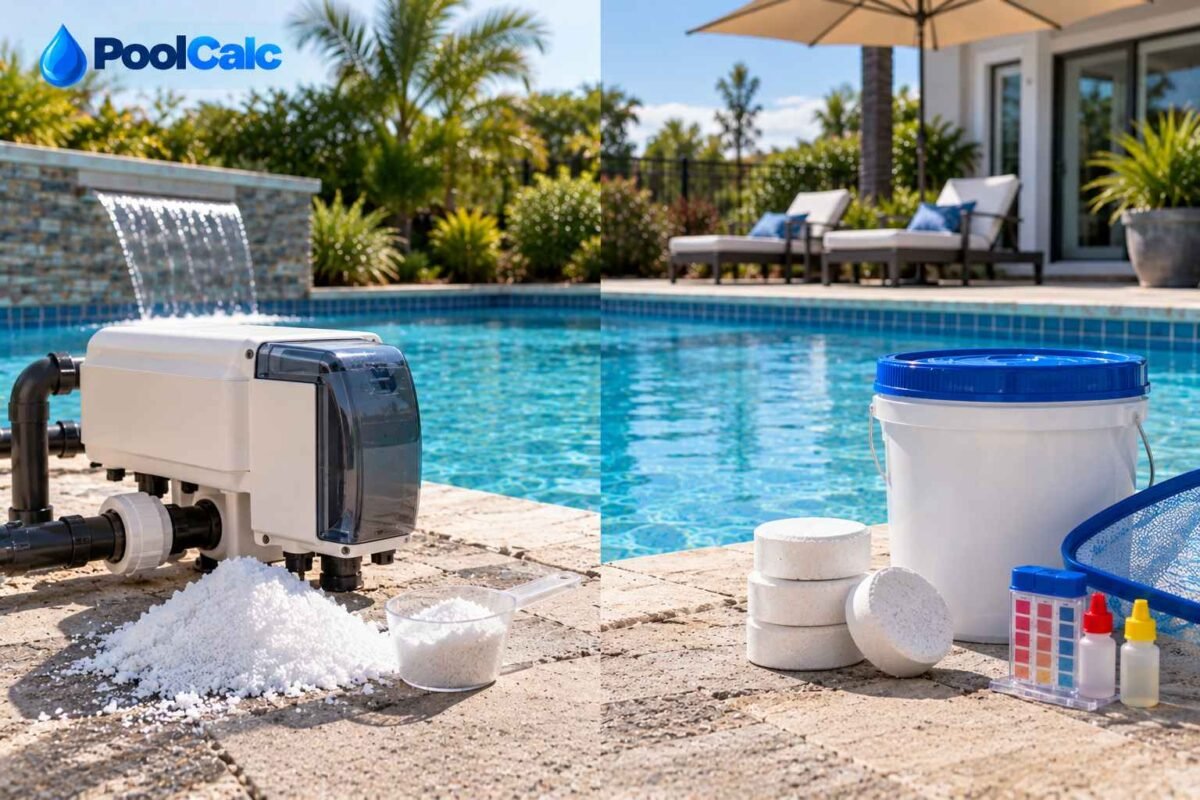
A saltwater pool is a chlorine pool. The difference is where the chlorine comes from: instead of being added from a bottle, it is made continuously from salt already dissolved in the water.
How it works
Salt is dissolved in the pool to around 3,000–3,500 ppm — roughly a tenth of seawater, which is why it tastes only faintly salty. Water passes through a cell where an electrical current splits the salt, producing chlorine. That chlorine sanitises the water and then reverts to salt, so the salt is not consumed. You top it up after rain, splash-out and backwashing, not because it is used up.
What actually changes
- No handling chlorine. The largest practical benefit, and the reason most people switch.
- Steadier chlorine. Production is continuous rather than in doses, so the level moves less.
- Softer water. A genuine difference in feel, and less of the smell people associate with chlorine.
- pH rises. The process produces a by-product that pushes pH up, so a salt pool needs acid more often than a traditionally chlorinated one.
- The cell is a consumable. Cells last a few years and are the most expensive part to replace.
What it does not change
It is still chlorine doing the sanitising, so everything about chlorine still applies: pH still decides how effective it is, stabiliser still protects it from sunlight, and it can still be overwhelmed. A salt pool that is not tested is exactly as likely to turn green as any other.
Looking after the cell
Calcium scales onto the plates over time and the cell gradually makes less chlorine. Many cells reverse their polarity periodically to shed it, but most still need inspecting and occasionally soaking in a dilute acid solution. A cell that is producing less than it should usually looks obviously scaled.
Salt is corrosive to some materials at these concentrations. Natural stone copings, some pool heaters and some metal fittings do not take it well. Check what your surround and equipment are made of before converting an existing pool.
Calculators
Is it cheaper?
Running costs are usually lower, because salt costs far less than a season of chlorine. Against that sits the installation, the electricity the cell draws, and a replacement cell every few years. Over the life of the system the two tend to be closer than the sales pitch suggests — the honest reasons to choose salt are convenience and how the water feels.
Can I convert an existing pool?
Usually yes — it means fitting a cell and a controller into the return plumbing. Check first that your surround, heater and fittings tolerate salt.
How often do I add salt?
Only when the level drops, which happens through splash-out, backwashing and heavy rain — not through normal sanitising. Test it at the start of the season and after any big water loss.
Why does my salt pool keep needing acid?
That is inherent to the process rather than a fault. Generating chlorine this way pushes pH up, so a salt pool needs acid more regularly. Keeping total alkalinity toward the lower end of range makes the drift slower.
Does a salt pool still need stabiliser?
Outdoors, yes — and usually a little more than a traditional pool, often 60 to 80 ppm, because it helps the cell keep up with what sunlight removes.