
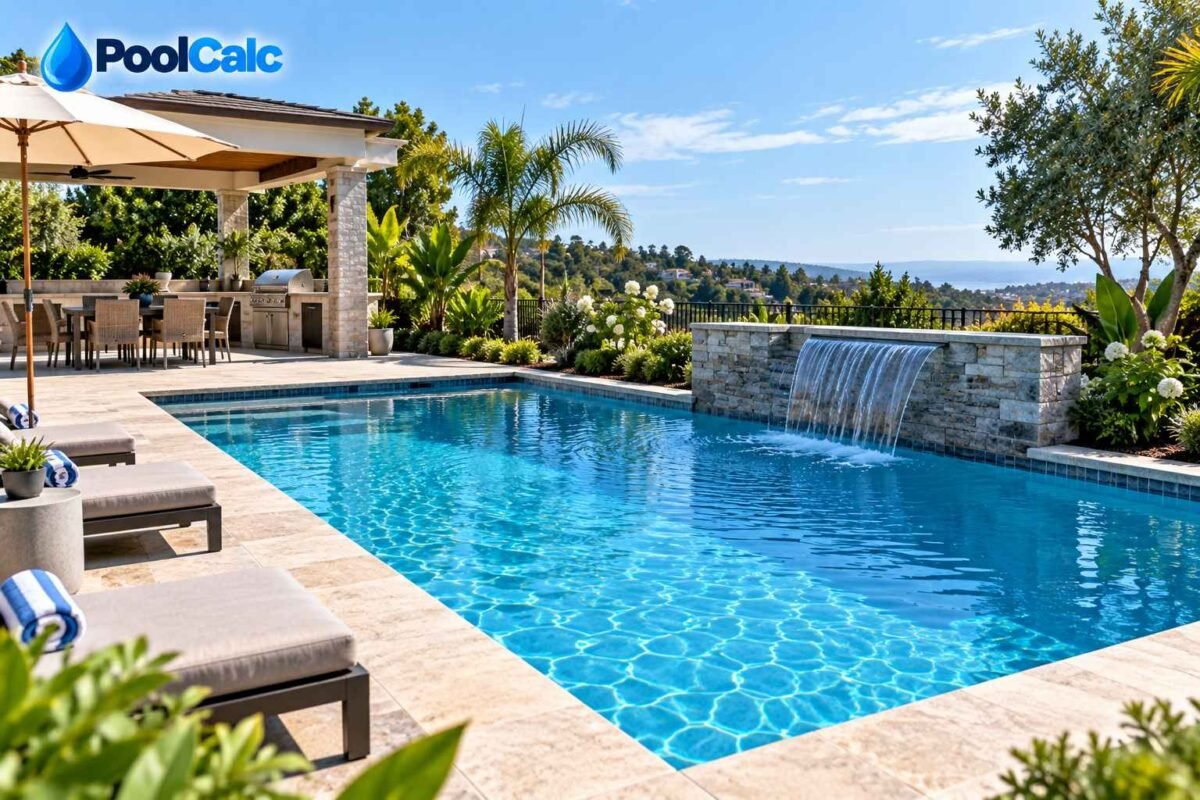
Most pools are outdoor pools, and almost every piece of pool advice is written for them. The weather is the defining factor: sunlight destroys chlorine, rain dilutes chemistry, and debris arrives whether you want it or not.
The one number that matters most outdoors is cyanuric acid. Without it, sunlight can destroy most of the free chlorine in a pool within hours of a sunny morning. With too much of it, chlorine is protected but works slowly. Between 30 and 60 ppm is the band that keeps both problems away.
Everything else follows the seasons: higher chlorine demand and longer pump hours in summer, less of both in winter, and a proper close and open if the pool freezes.
At a glance
| Characteristic | Typical |
|---|---|
| Cyanuric acid | 30 to 60 ppm — essential, not optional |
| Chlorine demand | High in summer, lower in winter |
| Pump run time | One full turnover a day in warm weather |
| Season | Year-round in warm climates; closed in freezing ones |
| Biggest variable | Weather |
Advantages and limitations
What works well
- Far less expensive than an equivalent indoor pool, with no building involved.
- Sunlight warms the water for free.
- Fresh air disperses chloramines instead of concentrating them.
- Solar heating is a genuine option.
What to weigh up
- Sunlight destroys unstabilised chlorine within hours.
- Rain dilutes chemistry and drops pH; storms bring debris and phosphates.
- Leaves, pollen, dust and insects all arrive uninvited.
- Evaporation loses water and concentrates everything left behind.
- A freezing climate means closing, winterising and opening every year.
Looking after one
- Hold cyanuric acid between 30 and 60 ppm — this is the one that catches people out.
- Test after every heavy rain; pH and alkalinity both move.
- Skim daily. Debris that sinks is far harder to remove than debris still floating.
- Use a cover — it cuts evaporation, heat loss and debris all at once.
- Adjust pump hours and chlorine output with the seasons rather than leaving them fixed.
What it costs to own
Outdoor pools are cheaper to build and cheaper to run than indoor ones, with no enclosure and no ventilation system.
The running costs are weather-driven, and the single highest-return purchase is a cover: it cuts evaporation, water loss, heat loss and chemical consumption at the same time, and it costs a fraction of any equipment upgrade.
Prices for pools vary enormously by region, access, ground conditions and specification, so no figure is quoted here. The Ownership Cost Calculator uses your own numbers instead of an average that would be wrong for most people.
Calculators for this pool
Maintenance Schedule
A task list built for your pool — print it and stick it by the equipment.
CalculateQuestions people ask
Why does my outdoor pool lose chlorine so fast?
Almost always cyanuric acid below 30 ppm. Without it, summer sun can destroy most of the free chlorine in a single afternoon.
Do I need to test after rain?
Yes. Rain is acidic, dilutes alkalinity, and washes in debris and phosphates. A heavy storm can move pH noticeably in a few hours.
Is a pool cover worth it?
It is the best value purchase an outdoor pool owner can make. It cuts evaporation, heat loss, chemical use and debris simultaneously.
How long should the pump run?
At least one full turnover a day in warm weather — usually 6 to 8 hours, less in winter. The Turnover Calculator gives the figure for your pool and pump.