
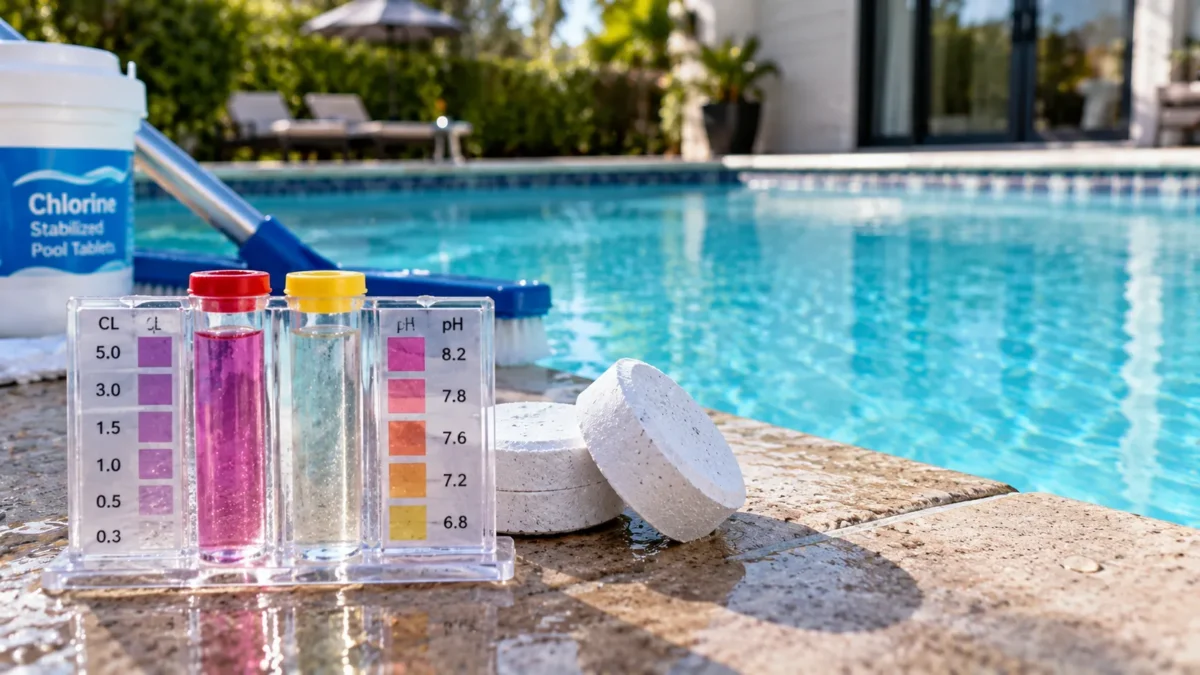
High free chlorine is usually the result of a shock treatment, an over-generous dose, or a salt cell left running too hard. It comes down on its own — the question is how quickly you need it to.
Some context helps. After shocking, 15 to 20 ppm is entirely normal and expected. What matters is not swimming until it falls back below about 4 ppm. Genuinely dangerous levels in a residential pool are rare and usually involve a chlorinator fault or a very large accidental dose.
What causes it
- A recent shock treatment. Normal, and it will fall within a day or two.
- Over-dosing. Usually from guessing at pool volume rather than calculating it.
- A salt cell set too high for the season or the bather load.
- A stuck or over-filled tablet feeder, particularly in cool weather when demand is low.
- Very low cyanuric acid combined with a normal dose — with nothing holding it back, the reading spikes.
What to test first
Before adding anything, take a reading. Guessing at this stage is how a small problem becomes an expensive one.
| Test this | Why it matters |
|---|---|
| Free chlorine | How far above range you actually are. Above 10 ppm, keep people out. |
| pH | Large chlorine doses push pH around; check it before adjusting anything else. |
| Cyanuric acid | Very low CYA makes chlorine read high and burn off fast. |
How to fix it
- Stop adding chlorine. Turn the salt cell down, or remove the tablet feeder.
- Uncover the pool and let it run. Sunlight destroys free chlorine quickly — an uncovered pool on a sunny day can lose several ppm.
- Wait and re-test. Most pools are back in range within a day or two without any intervention at all.
- If you need it down sooner, a chlorine neutraliser (sodium thiosulphate) works immediately. Add it in small measured amounts — it is easy to overshoot and end up at zero.
- Partially draining and refilling works too, and is worth considering if the level is extreme.
- Do not swim until free chlorine is below 4 ppm, confirmed by a test rather than by how long it has been.
Do not swim above 10 ppm free chlorine. High chlorine irritates eyes and skin, damages swimwear, and at extreme levels irritates the airways. If anyone has breathing difficulty after being in or near the pool, get them into fresh air and seek medical advice. Never mix pool chemicals, and never add two products to the water one after the other without circulating in between. Chlorine and acid together release chlorine gas. Always add chemical to water, never water to chemical.
Work out the numbers
These calculators give the figures for your pool rather than a rule of thumb.
Water Health Check
Enter your test results and see what is in range, what is not, and what to do first.
CalculateStopping it coming back
- Calculate your pool volume once, properly, and write it down. Most over-dosing starts with a guessed volume.
- Use the chlorine calculator for the dose rather than a capful.
- Turn the salt cell output down in spring and autumn.
- Do not leave tablets in the skimmer through a cool spell.
Questions people ask
How long until high chlorine comes down?
An uncovered pool in sunlight usually drops several ppm a day. From a 15 ppm shock, expect to be back under 4 ppm within one to two days.
Can I swim with high chlorine?
Below 4 ppm, yes. Between 4 and 10 it will sting eyes and fade swimwear. Above 10, stay out until it falls.
Does high chlorine damage the pool?
Sustained high chlorine bleaches vinyl liners, degrades rubber seals and O-rings, and fades solar covers. A short spike after shocking does no harm.
Why is my chlorine always high?
Usually a feeder or salt cell producing more than the pool needs, or a pool volume figure that is too large. Check the volume first — it drives every dose you make.