
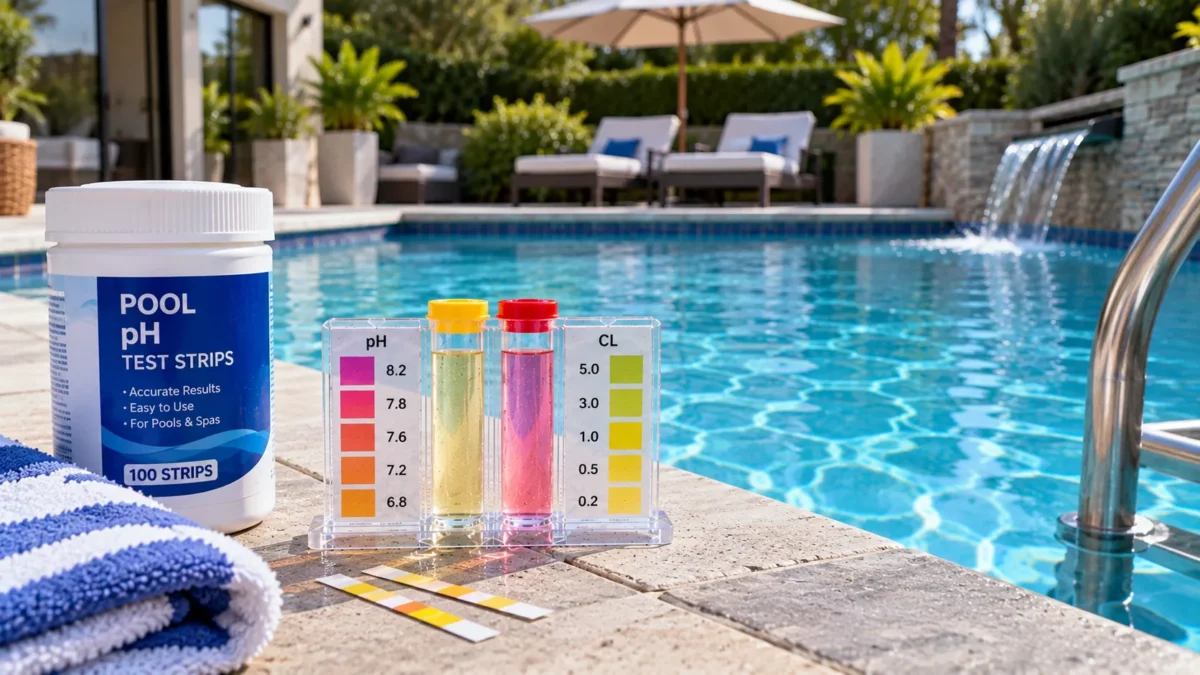
pH below 7.4 is more urgent than high pH. Acidic water corrodes metal fittings, heater cores and pump seals, etches plaster and stings eyes — and the damage is permanent.
High pH is an efficiency problem. Low pH is a damage problem. A pool sitting at 7.0 for a season can cost more in a replaced heater core than years of chemicals would have.
Low pH almost always travels with low alkalinity, because alkalinity is what holds pH up. Correct the alkalinity and pH usually follows.
What causes it
- Low total alkalinity. With no buffer, pH falls at the slightest provocation.
- Heavy rain, which is naturally acidic and dilutes alkalinity.
- Trichlor tablets, which are strongly acidic and drive pH down with every dose.
- Too much acid added in one go when correcting high pH.
- Soft fill water, low in both alkalinity and calcium.
What to test first
Before adding anything, take a reading. Guessing at this stage is how a small problem becomes an expensive one.
| Test this | Why it matters |
|---|---|
| pH | Below 7.2 is actively damaging equipment and surfaces. |
| Total alkalinity | Almost certainly low too. This is the real fix. |
| Calcium hardness | Low calcium plus low pH is the worst combination for plaster. |
How to fix it
- Raise alkalinity first. Baking soda lifts alkalinity and takes pH with it. Often nothing else is needed.
- Add the dose in two halves, four hours apart, with the pump running. Expect brief cloudiness.
- Re-test after four hours of circulation.
- If pH is still low with alkalinity in range, add soda ash using the pH calculator.
- Check calcium hardness too — low pH with low calcium will etch a plaster surface quickly.
- If trichlor tablets are your main chlorine source, that is the underlying cause. Switch some of it to liquid chlorine, which is pH-neutral in practice.
Below pH 7.0 the water is acidic enough to damage equipment within days and is uncomfortable to swim in. Correct it before using the pool. Never mix pool chemicals, and never add two products one after the other without circulating in between. Chlorine and acid together release chlorine gas. Always add chemical to water, never water to chemical.
Work out the numbers
These calculators give the figures for your pool rather than a rule of thumb.
Stopping it coming back
- Keep alkalinity at 80 to 120 ppm — it is what stops pH swinging.
- Test after heavy rain, which pushes pH down fast.
- Do not rely on trichlor tablets alone all season.
- Add acid in halves and re-test rather than dosing once and hoping.
Questions people ask
What does low pH do to a pool?
It corrodes metal — heater cores, ladders, light rings, pump seals — and etches plaster into a rough surface that then harbours algae. Vinyl liners lose elasticity and wrinkle.
Should I raise pH or alkalinity first?
Alkalinity, almost always. Baking soda raises both, and once alkalinity is in range pH usually settles where it should without a separate adjustment.
Why does my pH crash after rain?
Rain is mildly acidic and dilutes the alkalinity that would otherwise absorb it. A pool with low alkalinity has nothing to resist it, so pH drops sharply.
Is baking soda the same as alkalinity increaser?
Yes — both are sodium bicarbonate. Grocery baking soda works identically and usually costs far less per pound.